
Journal
Porsche 911 GT3 RS or GT2 RS: two visions of extreme performance
Some names, at Porsche, are not just spoken: they are felt. GT3 RS. GT2 RS. Two badges that hit like a command, two banners for those who can only imagine the 911 pushed to its absolute limit. This story pits two generations against each other, two eras, two answers to the same obsession: the Porsche 911 GT3 RS type 992 and the 911 GT2 RS type 991.2. Born a few years apart, they are not rivals in the ordinary sense. They are two different responses to the same question: how far can you take a road-going 911?
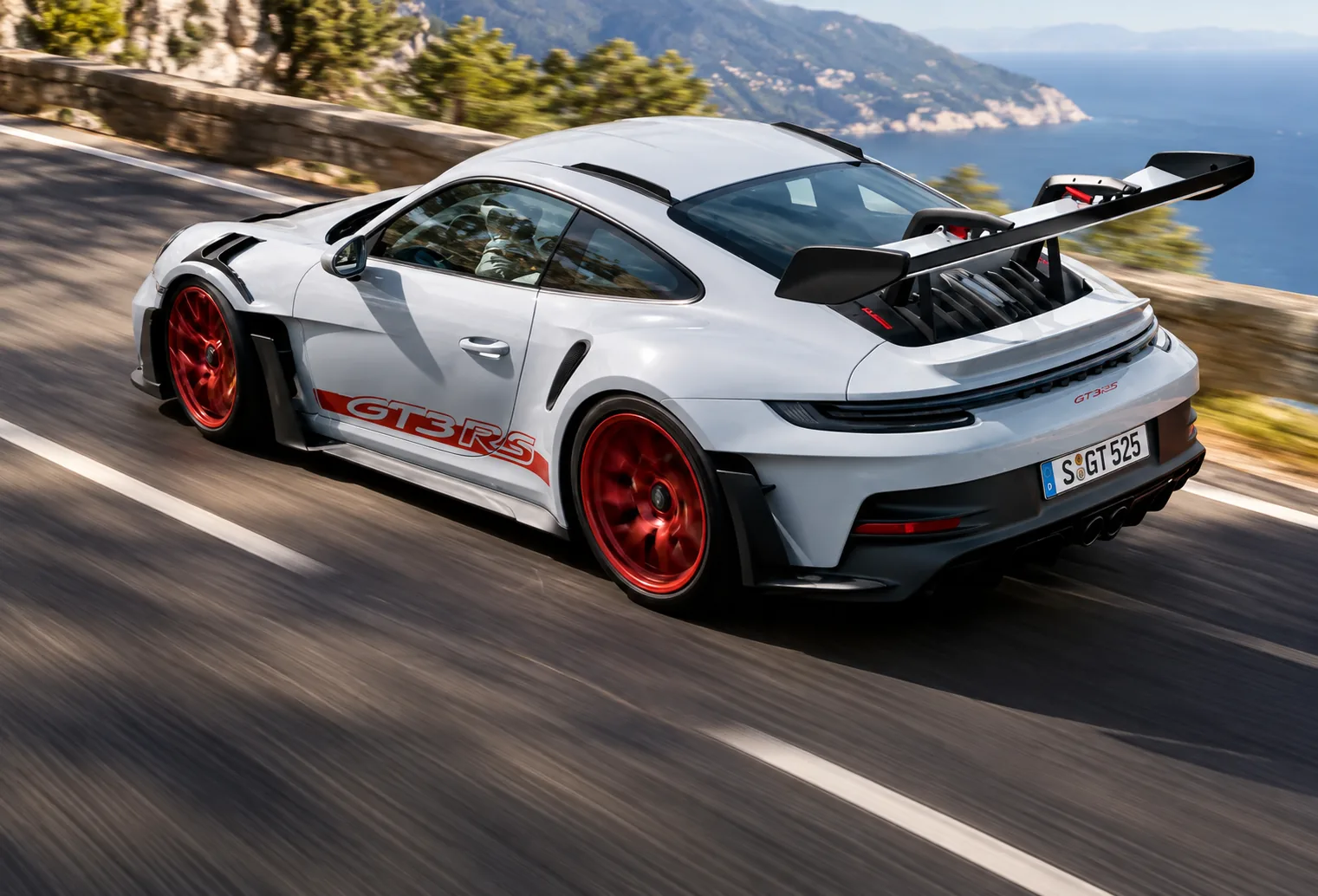
Discover the 911 GT3 RS on the official Porsche website
The GT3 RS, or the art of precision
The 911 GT3 RS type 992 is, first and foremost, a matter of breathing. A 4.0-litre flat-six, naturally aspirated, stretching to 9,000 rpm, producing 386 kW (525 hp) and 465 Nm. No turbo to force destiny. Just an engine that breathes, climbs, sings. Here, performance does not shout; it unfolds. Throttle response is immediate, progressivity almost surgical. The driver feels every rev, every vibration, every fraction of a second where the engine tips into another zone. The soundtrack is part of the picture: a flat-six that rises, tightens, and eventually swallows the horizon. But the real revolution of this generation is not measured in horsepower. It is written in the air. To free up the front, optimise cooling and sculpt the airflow, Porsche installed a central radiator inherited from racing. Front, rear, everywhere, moving elements work in silence. A massive two-element rear wing dominates the silhouette. At 285 km/h, the GT3 RS presses up to 860 kg onto the tarmac, roughly three times more than a standard GT3 (992). At 200 km/h, total downforce already reaches 409 kg. For the first time on a production Porsche, a DRS (Drag Reduction System) opens and closes aerodynamic surfaces to reduce drag on the straights. Inside the cockpit, the steering wheel becomes a control panel. The driver adjusts, refines, composes. PASM, differential, electronic aids: everything runs through their fingers. Compression and rebound at the front and rear can be tuned independently from -4 to +4 per axis, like a race mechanic suddenly sitting behind the wheel. The GT3 RS is not a slightly muscle-bound 911. It is a machine conceived around airflow, chassis, and trajectory. A car that does not seek to impress, but to endure, lap after lap, remaining precise, consistent, relentless.
The GT2 RS, or mastered power
The 911 GT2 RS type 991.2 tells a different story. Launched in 2017, it does not lead with subtlety. It strikes. Its 3.8-litre twin-turbo flat-six develops 515 kW (700 hp) and 750 Nm. Two turbos swell the cylinders; boost arrives in waves, denser and heavier with each gear. The seven-speed PDK absorbs, transmits, and the road begins to blur. The figures are dizzying: 0–100 km/h in 2.8 seconds, top speed around 340 km/h. Like the GT3 RS, the GT2 RS is rear-wheel drive. But here, 700 horsepower on the rear axle creates a sharper character. When grip starts to fade, when the rear end comes alive, the car reminds you it is not here to reassure. It demands, it tests, it pushes the driver to choose: brake earlier, open later, accept the risk or back off. With a claimed weight of around 1,470 kg (depending on equipment and market), the GT2 RS has been lightened, sculpted, stripped of the superfluous. Carbon fibre, composites: every gram has been debated. Rear-axle steering, electronically controlled differential, bespoke chassis: everything is there to channel this excess of power. The GT2 RS is not just a straight-line missile. It is a complete architecture, aimed at one goal: making the impossible drivable.
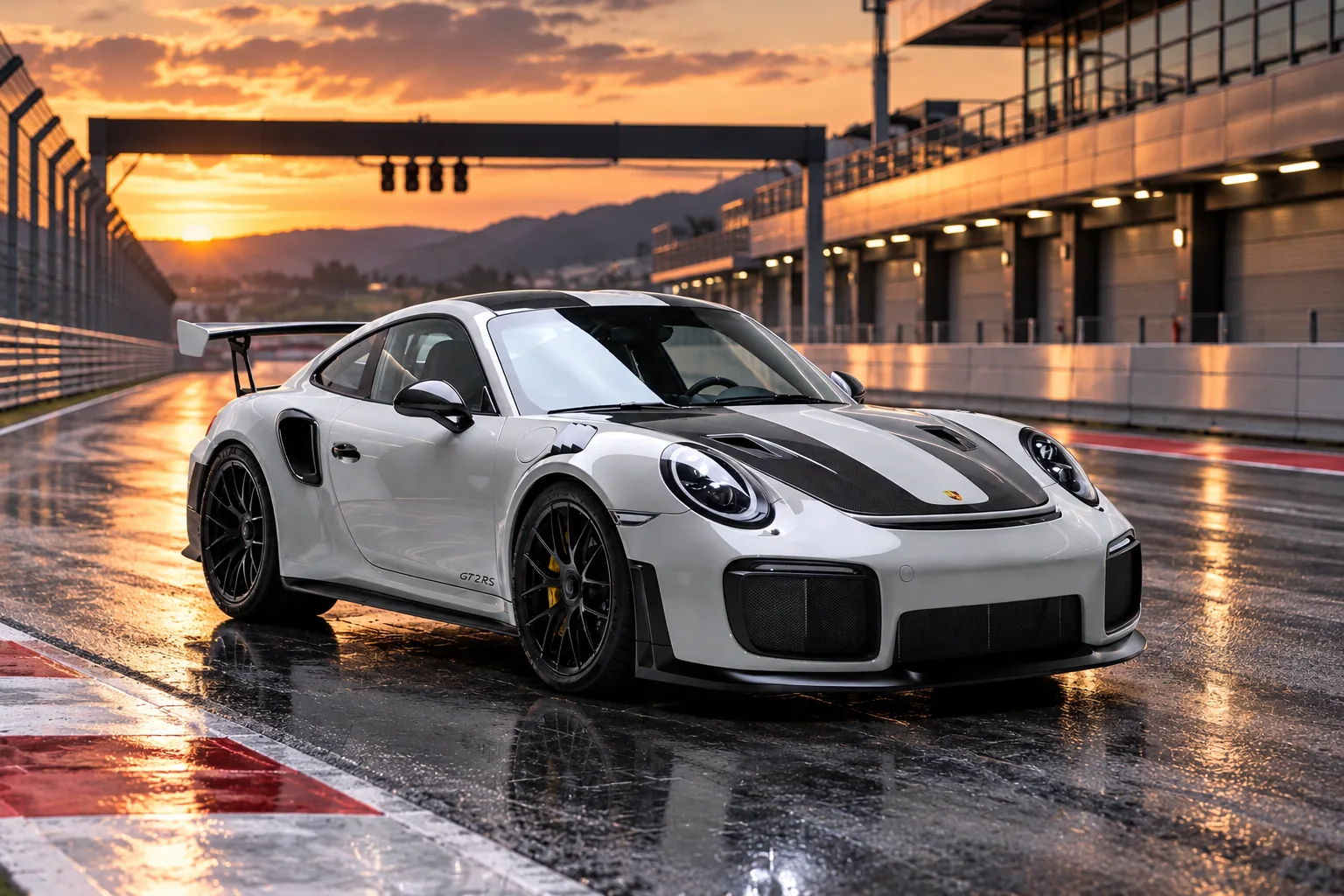
The GT2 RS Clubsport: logic taken to the track
The philosophy of the GT2 RS finds its ultimate expression in the 911 GT2 RS Clubsport. No road homologation, no compromises. A customer race car, designed for track days, Clubsport series, selected motorsport events. Limited to 200 units, it turns its back definitively on the street. Welded roll cage, competition bucket seat, six-point harness, fire extinguisher system: the interior is no longer a cabin, it is a cockpit of combat. Everything is designed for the circuit, for repeated effort, for precision under pressure. The Clubsport is not simply a more radical option. It is the GT2 RS stripped of its last concessions. Where the road car had to live with the road, the Clubsport speaks only one language: that of the stopwatch.
Two readings of performance
Putting a 911 GT3 RS 992 face to face with a 911 GT2 RS 991.2 is not about opposing a “sensible” car to a “mad” one. It is about confronting two ways of chasing the limit. The GT3 RS prioritises aerodynamic efficiency, chassis precision, and the exploitation of a naturally aspirated engine that must be kept high, very high, to yield its essence. It rewards regularity, finesse, the ability to repeat the perfect gesture. The GT2 RS, meanwhile, bets on power, torque, top speed, and the dangerous game of overpowered rear-wheel drive. It demands courage, clarity, an acceptance of risk that few road cars impose. The numbers tell the difference: 525 hp and 465 Nm for the GT3 RS, 700 hp and 750 Nm for the GT2 RS. And yet, their claimed weights remain close. The contrast is all the more striking. On one side, a meticulously worked exploitation of engine, chassis, and aerodynamics. On the other, a rear-drive architecture pushed to its paroxysm, with a chassis and aero capable of containing – almost – that excess. Two generations. Two philosophies. Two ways to tremble behind the wheel of a 911.
Comparison table: GT3 RS (992) vs GT2 RS (991.2)
| Characteristic | Porsche 911 GT3 RS (992) | Porsche 911 GT2 RS (991.2) |
|---|---|---|
| Generation | 992 (from 2022) | 991.2 (2017–2019) |
| Engine | 4.0 L naturally aspirated flat‑6 | 3.8 L twin‑turbo flat‑6 |
| Power | 386 kW (525 hp) | 515 kW (700 hp) |
| Torque | 465 Nm | 750 Nm |
| Max revs | ~9,000 rpm | ~7,000 rpm |
| Transmission | 7‑speed PDK, rear‑wheel drive | 7‑speed PDK, rear‑wheel drive |
| 0–100 km/h | ~3.2 s | ~2.8 s |
| Top speed | ~296 km/h | ~340 km/h |
| Claimed weight | ~1,450–1,500 kg (spec‑dependent) | ~1,470 kg (spec‑dependent) |
| Aerodynamics | Active, DRS, 860 kg at 285 km/h | Developed, ~142 kg at 200 km/h |
| Downforce at 200 km/h | 409 kg | ~142 kg |
| Rear‑axle steering | Yes | Yes |
| Advanced chassis settings | Yes (PASM, diff, DRS, TC, etc.) | Yes (PASM, diff, TC, etc.) |
| Clubsport version | No (track options only) | Yes, 200 units, not road‑legal |
Weights and performance figures may vary depending on equipment, market, and sources.
But one constant, stubborn, almost obsessive: Porsche’s pursuit of maximum, absolute performance from the 911.
Polls